Family Caregiver Support

Stories and Strategies to Help You Juggle the Challenges of Long-Term Care

  • Home
  • Caregiver News
    • Anti-Immigrant Policies Worsen the Labor Shortage in Home Health Care
    • Stress-Free Senior Caregiving: 4 Tips to Make the Job Easier
    • Should You Plan for Long-Term Care Expenses
    • Financial Tips for Helping a Senior After a Loss
    • Yoga Is an Important Stress Reducer for Caregivers
    • Diabetes Coverage: Tips to Help Seniors Plan Ahead
    • The Do’s and Don’ts of Caregiver Self-Care
    • Resources for Senior Caregivers
  • Book Table
  • About
  • Contact
  • Opt-out preferences
You are here: Home / Archives for caregivers

Resources for Senior Caregivers

February 15, 2023 by Karen Weeks

Being a senior caregiver is a rewarding job, but it can also be challenging, both physically and emotionally. It takes a lot of time, effort, and dedication to provide quality care while also balancing your own work and personal life. Long-term stress can take a toll on your overall well-being.
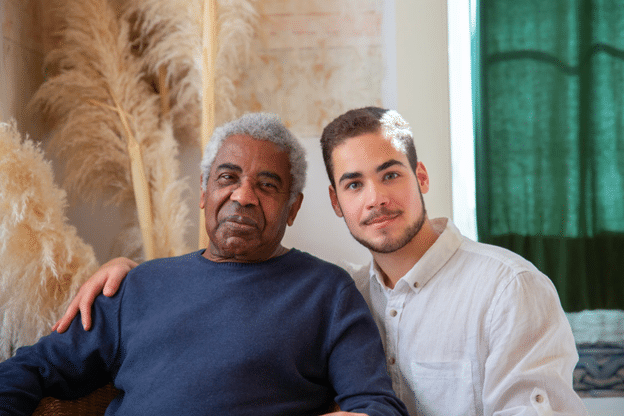
An elderly gentleman and his caregiver grandson
Caregivers can be grandchildren, nieces, or nephews. Caring for seniors provides an opportunity for intergenerational bonding. Even grandchildren who just stop by to visit can lift the spirits of seniors who spend the day alone. (Image via Pexels)

Tap At-Home Services

Hiring at-home services (home health aides, meal delivery, and housekeeping services) can lighten the load of caring for seniors. These services can be tailored to fit your needs and budget. Take a look at your options online, as these services vary around the country.

“Ordering in” provides another benefit. Often those who deliver Meals on Wheels provide social contact that’s good for seniors’ mental health.

Don’t assume that hiring help is just for people with loads of money. Depending on which state you live in, you may find that state support makes home health care affordable, even for those of modest means. Here’s a state-by-state breakdown of benefits. For a complete list of services, download this brochure. It will point you to programs that might be just what you or your senior needs.

But isn’t hiring all these services going to break the bank? No, it’s not. So called “Cash and counseling programs” originally began as a pilot program to assist Medicaid-eligible seniors. This pilot program has now expanded to every state, with each state calling it something different. Services are different, too. However, the basic idea is to provide money so that seniors can hire and pay their own caregivers.

Ask for Help

Often, caring for a senior falls primarily on one person, often a middle-aged daughter. However, in many cases, the caregiver can call on family members for extra help. A family member who lives far away might be able to fly in for a week or more. If clothing is needed, they can shop and send a care package by mail. Those who live close can drive mom or dad to doctors’ appointments or run errands.

But why don’t other people see what needs to be done and do it? Oftentimes, people who aren’t involved on a day-to-day basis hang back. They don’t want to step on the caregiver’s toes. Also, they don’t know what, exactly, needs to be done. So, rather than complain that the burden is all on you, figure out specific, actionable tasks. Delegate! It can make a big difference in your mental health.

Ask About Job Flexibility

If your job requires you to work outside the home, then consider asking your boss about flexible work hours or working remotely. In many cases, this will allow you to take care of your loved one during the day without you having to sacrifice your job in the process. Additionally, some employers offer paid leave for caregivers.

According to the website Easy Living, a Florida company that specializes in senior care,

  • An estimated 66% of caregivers are female.
  • The average caregiver is a 49-year-old woman who works outside the home and provides 20 hours per week of unpaid care to her mother.
  • Although men also provide assistance, female caregivers may spend as much as 50% more time providing care than male caregivers.

Taking on the role of caregiver means that a working adult risks being short of money when they enter their own senior years. For that reason, it’s important that caregivers look into the possibility of getting paid.

Don’t Work for Free

If you get paid, then you contribute to your own Social Security account.

In California, New York, Washington, the District of Columbia, New Jersey, and Rhode Island, caregivers taking time off work can receive up to between 60% and 70% of their lost wages up to a maximum of $1,620 per week (as of January 2023), for up to 8 weeks during a 12-month period. The benefit amount is determined by an applicants’ highest quarter of earnings during the previous 12 months.

If your family member qualifies for Medicaid, then in seven states – New York, Nevada, Missouri, Pennsylvania, Arizona, and Indiana – a friend or family member can get paid to be a caregiver.  If the senior being cared for is a veteran, then the options for care are even greater. There’s no time limit on getting paid. Many veterans have such severe injuries that they must be cared for 24/7. That care can last years.

Younger Caregivers

What can happen is that caregiving goes on far longer than anticipated. The middle-aged daughter might realize she needs to go back to work because she can see her own retirement just over the horizon. Perhaps, there’s a young person in the family who could step in.

A young person – a grandchild or grand-niece or grand-nephew – might volunteer to help out for what they envision as a short-term good deed. Or, they might be forced to become a caregiver because there’s simply no one else. (See the story of Jacquelyn Revere below.)

In some ways, moving in with an elderly relative solves problems for both generations. The young person gets room and board in exchange for light housekeeping and companionship. They may even get paid, something that’s good for self-esteem. A stint of family caregiving can also allow people in their twenties time to regroup and decide on long-term goals.

Plan for Online Learning

If the younger generation opts in and becomes a family caregiver, then going back to school online is an excellent way to increase their knowledge base. If the demands of caregiving aren’t too heavy, the responsibility involved in caring for an elder can advance a young person’s career. If the young person was let go due to downsizing, had a job with on-again, off-again shifts, or thought their job wasn’t going anywhere, then becoming a caregiver could be a perfect fit.

That’s because caregiving often means many empty hours during the day. (If the older person has dementia, that’s not the case. There are no empty hours.)

Depending on the needs of the senior, however, a younger caregiver might be able to sign up for online courses. There are many courses, such as those offered through Coursera, that offer degrees and certifications in IT, business, healthcare, and more. These online programs could open up opportunities in the future. If a young person takes on a caregiving role, knowing that they have career options can help lighten the load and reduce stress.

Have a CV Handy

Whether you’re a middle-aged woman taking time out to help her mom or a younger person, your time as a caregiver doesn’t have to show up as a blank space on your resume. And, eventually, you’ll be ready to make the transition from caregiver back into the workforce.

As a caregiver, you’ve proven you can handle responsibility. Having an updated CV will showcase all of your skills, qualifications, and experiences so you can impress potential employers. Build a stunning curriculum vitae with an online builder. The best part? Creating a professional-looking document is easy with a CV template, which you can customize with your favorite copy, colors, and images.

Find Support

Being a senior caregiver can be overwhelming, even for the most experienced individual. To combat burnout, join support groups and forums where you can touch base with other caregivers. They understand what you’re going through. They’re your cheering section.

This is especially beneficial if your caregiving duties make it impossible for you to leave the house. Listen to this NPR story about Jacquelyn Revere, a 29-year-old woman who became a #dementia TikTok celebrity. Jacquelyn’s mother and grandmother both had Alzheimer’s, and it was up to her to keep the family afloat. Just imagine the Herculean effort it took to care for two women with dementia at the same time!

Meditate for Me-Time

As you look for support, remember to schedule alone-time. Even if you’re housebound, you can take a mental break by meditating. Meditating has been shown to reduce stress levels and improve overall mental health. Releasing stress is essential when taking care of someone else. Taking just 15 minutes out of each day for yourself can make all the difference when it comes to staying focused and energized.

Being a senior caregiver is no easy task, but there are resources you can tap into. They make the job easier. And, like Jacquelyn Revere, you may discover that caregiving helps you redefine your life’s purpose.


Here, Family Caregiver Support has compiled a list of tips that will help make your daily responsibilities easier. Check out inspiring caregiver stories. 

Help for Caregivers in Canada

December 21, 2018 by Marylee MacDonald

Life often requires us to step away from work commitments and focus on our loved ones’ needs. Whether a person has a child with a profound disability, an aging parent, a newborn, a sibling in profound mental distress, or a spouse with a terminal condition, the need to “be there” for our loved ones often takes priority over whatever else we may have going on in our lives. In this sense, families are a sick person’s–and a society’s–ultimate safety net. By acknowledging the role caregivers play in easing the burdens of newborns, the aged, or the ill, government policies can reinforce the positive contributions caregivers make to the economy. Here’s a glimpse of how Canada’s provincial and federal governments are acknowledging the various roles caregivers play.

Last April 10, 2018, The Times Colonist, a Canadian newspaper based in British Columbia, reported from Victoria, BC on news that could affect caregivers in many common caregiving scenarios. “The British Columbia government is moving to upgrade employment legislation covering five specific work absences ranging from pregnancy leave to time off for parents of a missing or deceased child.” The changes were implemented through the Employment Standards Act.

father and son
Photo by Nancy J. Scott

A news release from the Labour Ministry says the amendments support workers by extending compassion to families facing tragic circumstances. Parents grieving the death of a child receive up to 104 weeks of unpaid leave without concern about job loss, while compassionate care leave more than tripled from eight to 27 weeks for employees caring for a terminally ill family member.

The changes include an option for longer leave for mothers before the birth of their child, extended, unpaid parental leave for new parents, and up to 52 weeks of unpaid leave for parents dealing with a crime-related disappearance of a child.

Quebec’s Parental Leave Policy

The province of Quebec has been leading the way in improving employment standards for families with two working parents. Quebec pays for new fathers to take parental leave. The provincial program covers up to 70 percent of their income. In Quebec eighty percent of fathers claimed or planned to take parental leave in 2016, almost triple the 28 per cent recorded in 2005.

Alberta’s Policy

Policies in Alberta are similar, but not nearly as generous, as those in Quebec. Employees are eligible for five days of personal and family responsibility leave if they have been employed at least 90 days with the same employer. Leave must be considered necessary for the health of the employee or for the employee to meet his or her family responsibilities in relation to a family member. Employers and employees may agree that the employee may take the leave in half day increments if required.

So who’s eligible? The definition is broad. All of the following are considered family members:

  • Partner (spouse, adult interdependent or common-law)
  • Parents, foster parents, guardians
  • Children, foster children, wards, partner’s children
  • Siblings
  • Grandchildren
  • Grandparents
  • Any other person living with the employee as a member of their family

Caregivers Alberta has a very good description of caregivers’ challenges and contributions. “There are more than 8 million caregivers in Canada- more than 1 in 4 adults. If you were to replace all the care they provide it would cost $66 billion per year…As a society, we need caregivers. The population is aging, and people are living longer with illness and disability. As care needs grow, we rely on caregivers to fill in the gaps. But caregivers can’t do it without support and recognition from the government, the system and the community.”

It’s interesting to note that in Canada, government policies have been very forward-thinking when it comes to providing support for young parents.

Changes in Federal Policies

Across Canada the trends of fathers taking parental leave is on the rise. An analysis of recently released census data by the Vanier Institute of the Family found that nationwide, fathers are increasingly taking more time off after the birth of a child. The institute found 30 percent of new fathers in 2016 reported they took, or intended to take, parental leave, up from three per cent in 2000.

The Canadian federal budget now includes a five-week, use-it-or-lose-it incentive for new dads to take parental leave and share the responsibilities of raising their young child, according to The Canadian Press. The goal was to give parents more incentive to share child-rearing responsibilities so that new moms could more easily enter the workforce. “The government has been under increasing pressure from advocates to make further changes to Canada’s parental leave policies,” according to reporter Andy Blatchford from The Canadian Press.

Prime Minister Justin Trudeau said making it easier for fathers to take time off to care for a newborn would help remove workforce barriers for women. In general, the participation rate of women in Canada’s job market is largely unchanged from where it was in the early 2000s, said a memo, obtained by The Canadian Press under the Access to Information Act.

“Whatever format you have, that path is removing some of the barriers and the obligations and the expectations that hold women back in the workforce, so there are a lot of things to do,” Trudeau said.

Under rules that came into effect in December, new parents can spread 12 months of employment insurance benefits over 18 months, even though experts, labor and business groups expressed concern the program would only benefit families with higher incomes.

The Liberals have heard from experts that the popular program in Quebec should be replicated at the federal level. They’ve also been urged to raise the value of benefits paid out for parents who opt for an 18-month parental leave, and to provide low-income families with access to a six-month leave option with a higher rate of income replacement. Some have also recommended making leaves available to people who aren’t considered a primary caregiver, such as a grandparent.

What does this all cost? Last year’s budget pegged the cost of the measure at $152 million over five years and $27.5 million a year afterwards. It’s interesting to look to our neighbor to the north and contemplate why some circumstances (and people) receive support.


The Evolution of a Caregiver

October 20, 2015 by Marylee MacDonald

caregiver hand
To care for a loved one, caregivers must guard their own emotional resources.

Are you a caregiver? A caregiver is anyone–friend or family–who steps in to help. Caregiving means that you, the caregiver, take on the responsibility for someone else’s life. You might shop for groceries, babysit, or pick up clothes at the dry cleaners. You might provide transportation to doctors’ appointments or deal with insurance claims. Above all, you take on the worry. The person you are caring for can’t manage on their own. You know it. They may or may not realize how essential you are to their well being.

What happens so often is that an initial crisis turns into a long, agonizing decline. Now, it’s not just hours every week. It’s years of your life. That’s where the rubber meets the road.

Taking on a caregiving role isn’t something most of us have in our life plan. We’re called into service like reluctant draftees. There simply isn’t anybody else. Taking on this role could jeopardize your own retirement security. Long-term caregiving also can take a toll on your health. To take on this responsibility willingly, generously, and with an open heart–that’s the key to your success. On this website you’ll find news about caregiver health, smartphone apps, home nursing, hiring and paying for help, and much more. You’ll also find stories from people who’ve been walked the caregiver’s long, and sometimes lonely, walk.

Above all, caregiving means that you, the caregiver, must guard your emotional resources. Only you can provide what the person you are caring for needs most. It’s what we all need. Love, attention and compassion.

If you’re a caregiver, what are your biggest challenges? If you were one but have now come out on the other side, how did you cope? If you could write a letter to a person who is new to caregiving, what advice would you offer?

A Promise Is A Promise

September 19, 2014 by Marylee MacDonald

Guest Post by Margaret Spence

My mother Ruth was sixty-nine when Alzheimer’s began its leisurely, vicious, search-and-destroy ransack of her brain. My father cared for her, more or less by himself, for the next ten years, until he was diagnosed with cancer, and died in five short months.

For a long time Dad denied there was anything seriously wrong with our mother. He began to cut up her food, reminding her to eat. Retired, he took over the household tasks with some relish at first, discovering a love of cooking. He made syrups of orange and lemon. Strips of lavender, wrapped neatly in bows of string, began to appear in the linen closets. Letting my mother lose control of the house, he seemed to discover another creative part of himself. For a time, his new delight in housekeeping allowed him to deny that she could no longer do the simplest tasks. When he woke up one winter night and found her no longer next to him, he roamed the neighborhood in terror. He found the next morning. Staring glassy-eyed at the house in front of her, she stood in the frozen dew.

The author's mother Ruth in the 1950s
The author’s mother Ruth in the 1950s

After the diagnosis, I went to social services seeking help. They mentioned a day care program for Alzheimer’s patients, and Dad and I went to visit. A dozen or so elderly people sat in a circle and tossed a ball from one to the other. The director of the program, in thick foreign accent, explained that it was social time and also occupational therapy. My father was silent in the interview. Later he told me, “Your mother has a master’s degree! She won’t want to be with those people.”

Of course, he never asked her opinion, and she was far beyond giving it. And so, even though by this time my mother was further gone than the patients in the day program, my father insisted she stay home so he could care for her. He did rely on the kind woman who came to clean once a week, and remembered her in his will.
It was an achingly lonely life. Friends fell away. At night, after he’d put my mother to bed, Dad would watch television, a bottle of whiskey by his side.

Dad often said our mother was cheated of the last ten years of her life. He meant he was, as well. His devotion to Mother astounded people, and he took pride in it, I think. But I wanted him to find to find a place for Mum. A place close by so he could visit her every day, all day if he wanted, but could keep his own home as a place of refuge.

I wanted my father to give the rest of his family some of himself. His four children. His twelve grandchildren. To sell the big old house and buy a small one, so my brother could look in on him every day and I could come and care for him on my visits home. But my father always refused. Perhaps, at the beginning of the disease, my mother had begged him not to “put her away” and he had promised. He was nothing if not honorable, but honor could not save his own life or his wife’s.
Margaret Spence

Next Page »

Book title plus a snowy scene showing a mother and daughter walking up a hill in Vermont
If you like literary fiction where even the characters’ best intentions may not be enough to bridge the gap between them, you’ll love Montpelier Tomorrow.

Recent Blog Posts

  • Letting Go: How to Clear Out Your Home After You’ve Decided What’s Coming With You June 23, 2026
  • What Actually Fits: A Room-by-Room Guide to Downsizing into a Senior Apartment June 9, 2026
  • How to Balance Work, Life, and Senior Care Without Losing Yourself June 2, 2026
  • How to Actually Take Care of Yourself When You’re Too Busy Taking Care of Everyone Else May 6, 2026
  • Avoiding Burnout: Support for New Caregivers February 13, 2025
  • A Safety Net for Health Care April 4, 2023

Featured Books

God’s Gift Within: The Story of the Joshua Quilt

God’s Gift Within: The Story of the Joshua Quilt
Buy This Book Online
Buy from IndieBound
Buy from Barnes and Noble
Buy from Amazon Kindle
Buy from Amazon
God’s Gift Within: The Story of the Joshua Quilt
Buy now!

A Chance to Say Goodbye: Reflections on Losing a Parent

A Chance to Say Goodbye: Reflections on Losing a Parent
Buy This Book Online
Buy from Barnes and Noble Nook
Buy from Barnes and Noble
Buy from Amazon Kindle
Buy from Amazon
A Chance to Say Goodbye: Reflections on Losing a Parent
Buy now!

The Space Between: A Memoir of Mother-Daughter Love at the End of Life

The Space Between: A Memoir of Mother-Daughter Love at the End of Life
Buy This Book Online
Buy from Barnes and Noble
Buy from Amazon Kindle
Buy from Amazon
The Space Between: A Memoir of Mother-Daughter Love at the End of Life
Buy now!

Bonds of Love and Blood

Bonds of Love and Blood
Buy This Book Online
Buy from IndieBound
Buy from Amazon Kindle
Buy from Amazon
Buy from Barnes and Noble Nook
Buy from Barnes and Noble
Buy from IndieBound
Bonds of Love and Blood
Buy now!

Archives

© Marylee MacDonald | All Rights Reserved.
Manage Cookie Consent
To provide the best experiences, we use technologies like cookies to store and/or access device information. Consenting to these technologies will allow us to process data such as browsing behavior or unique IDs on this site. Not consenting or withdrawing consent, may adversely affect certain features and functions.
Functional Always active
The technical storage or access is strictly necessary for the legitimate purpose of enabling the use of a specific service explicitly requested by the subscriber or user, or for the sole purpose of carrying out the transmission of a communication over an electronic communications network.
Preferences
The technical storage or access is necessary for the legitimate purpose of storing preferences that are not requested by the subscriber or user.
Statistics
The technical storage or access that is used exclusively for statistical purposes. The technical storage or access that is used exclusively for anonymous statistical purposes. Without a subpoena, voluntary compliance on the part of your Internet Service Provider, or additional records from a third party, information stored or retrieved for this purpose alone cannot usually be used to identify you.
Marketing
The technical storage or access is required to create user profiles to send advertising, or to track the user on a website or across several websites for similar marketing purposes.
  • Manage options
  • Manage services
  • Manage {vendor_count} vendors
  • Read more about these purposes
View preferences
  • {title}
  • {title}
  • {title}